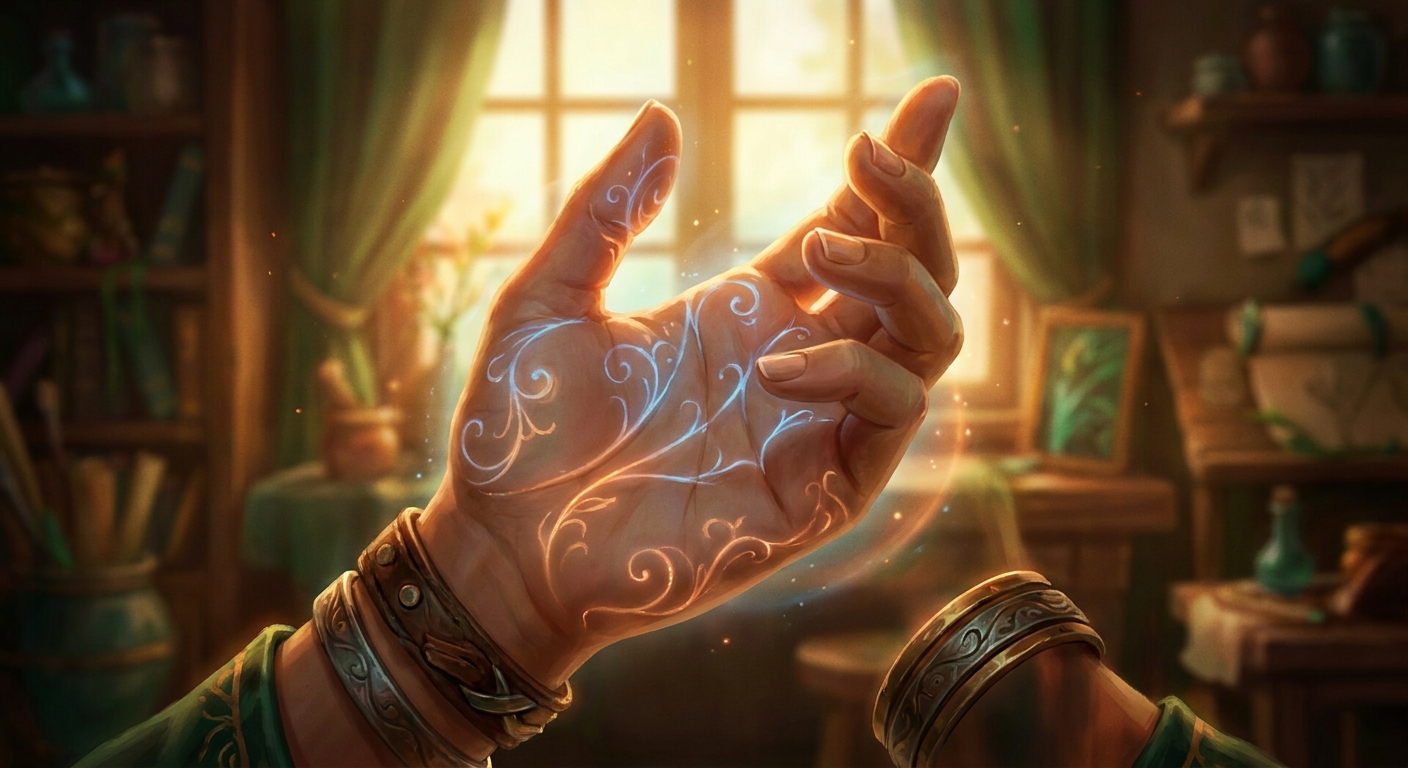
The Real Story Behind the Life Line on Hand
You look down at your palm and trace the curve wrapping around your thumb; that distinct crease is the famous life line on hand. For generations, people have stared at this very spot, filled with anxiety, wondering if a short crease spells impending doom. We need to clear the air about what this biological marker actually represents. It does not dictate your exact expiration date or map out a fatalistic destiny. Instead, modern readers and anatomy enthusiasts view it as an indicator of vitality, major lifestyle shifts, and general physical energy. Think of it as a physical map of your internal drive and enthusiasm for daily activities rather than a strict countdown timer.
The study of palmar flexion creases remains deeply fascinating, blending ancient cultural traditions with straightforward anatomical curiosity. As we navigate through 2026, more people are looking at these physical markers not for mystical fortune-telling, but as reflections of genetic development, stress patterns, and personal wellness journeys. By understanding the shape, depth, and structural variations of this crease, you get a much clearer picture of your own physical resilience. Expect straight facts, clear historical context, and highly practical steps to analyze your own palm without the outdated mystical fluff. We are breaking down absolutely everything you need to know about this prominent, often misunderstood feature on your palm so you can read it with total confidence.
Read also: The Ultimate palm reading life line Guide; The Ultimate Guide to Life Path 9.
Decoding the Physical Markers of Vitality
Understanding the specific mechanics of this crease requires looking closely at its length, depth, and overall structural integrity. The way this line forms tells a compelling story about your stamina and overall quality of daily life. For example, a deep, unbroken, and clearly defined groove generally suggests robust physical health, a strong immune system, and a natural ability to bounce back quickly from illness. Another example is a chained or overlapping formation, which readers often interpret as periods of low energy, chronic stress, or fluctuating health conditions that require careful management. Let’s break down the most common variations and what they actually signify.
| Line Characteristic | Traditional Meaning | Modern Interpretation |
|---|---|---|
| Deep and clear | High vitality and strength | Good physical resilience |
| Short and faint | Low stamina, easily tired | Need for lifestyle balance |
| Chained or broken | Periods of illness or change | Major life transitions |
| Double line present | Divine protection | Exceptional immune support |
When you want to evaluate this crease accurately, you must follow a specific process. Here is how to properly assess your palm:
- Wash and dry your skin thoroughly with warm water to remove surface oils, making all the minor creases highly visible under good, natural lighting.
- Slightly cup your palm inward to naturally deepen the primary lines without stretching the skin too tightly, which can distort the natural curves.
- Compare the dominant hand (which reflects your active, outward life choices) with the non-dominant hand (which highlights your inherited, baseline traits) to spot any major deviations.
- Use a standard magnifying glass if you want to spot tiny intersecting lines or branches that the naked eye might easily miss.
When you examine your own hand, you are essentially looking at a palmar flexion crease that originally formed while you were still developing as a fetus. Its primary biological function is simply to allow your thumb motor function, stretching and folding inward effortlessly. Yet, the fascination with its psychological meaning persists strongly. A strong line wrapping broadly around the fleshy part at the base of the thumb indicates a large capacity for love, high energy levels, and boundless enthusiasm for new projects. Conversely, a line that hugs very tightly to the thumb might suggest a more cautious, reserved, or restricted approach to physical exertion and emotional vulnerability. The real trick is looking at the whole picture—blending anatomy and tradition—rather than isolating one single marker on your skin.
The Ancient and Evolving History of Hand Reading
Origins of Palmistry
Tracing the ancient roots of chiromancy takes us back thousands of years directly to ancient India, China, and Egypt. The practice of reading the life line on hand originated heavily in Hindu astrology and the philosophical texts of the Yijing in Chinese culture. Ancient sages genuinely believed that the human body reflected the vast cosmos, meaning the hands functioned as miniature maps of a person’s fate and character. They paid special attention to the major creases, associating the thick line surrounding the thumb with foundational life energy, deep family roots, and basic biological survival instincts. Kings and emperors often consulted palm readers before making massive military decisions, believing their hands held the secrets to victory.
Evolution Through the Middle Ages
As global trade routes expanded and cultures mixed, these intriguing concepts traveled straight to Europe. During the Middle Ages, palmistry faced intense, often violent scrutiny and was frequently associated with witchcraft or forbidden, occult knowledge. However, scholars during the Renaissance period aggressively attempted to legitimize the practice by blending it with early medical and astrological observations. Philosophers, artists, and physicians alike began systematically cataloging different hand shapes, finger lengths, and line structures. They debated fiercely whether a short crease definitively meant an early death. This specific debate caused immense fear and endless fascination among the general public. Books were rapidly published detailing every minor branch, star, and cross, turning chiromancy into a highly structured, albeit completely unscientific, system of personal analysis.
Modern State of Palm Reading
Today, the entire approach to hand reading has shifted significantly. As we exist in 2026, the focus leans heavily toward psychological profiling, wellness tracking, and self-reflection rather than fatalistic, doom-and-gloom predictions. Professional modern readers emphasize repeatedly that minor lines can actually change over time as a person drastically alters their daily habits, diet, or mental state. The practice is now often categorized alongside tarot, astrology, and personality tests as a gentle tool for introspection. People use it to prompt honest conversations about their physical health, chronic stress levels, and overarching life choices, steering totally clear of the definitive, frightening predictions that dominated past centuries. It acts as a mirror for personal growth rather than a crystal ball.
The Biology and Science of Your Palms
The Biology of Palmar Flexion Creases
From a strictly scientific and biological standpoint, the life line on hand is medically known as the thenar crease. This distinct fold develops incredibly early in human fetal development, typically forming around the 10th to 12th week of gestation. Its primary mechanical purpose is brilliant: it provides the thick palmar skin with enough slack and flexibility so the opposing human thumb can grasp objects without tearing the delicate underlying tissue. The depth, exact curvature, and prominence are heavily influenced by the constant movement of the fetal hands while inside the womb. When you flex your thumb inward across your palm to grab a cup or a pen, the skin naturally folds exactly along this specific crease. It is a brilliant piece of evolutionary biomechanical engineering rather than a mystical seal of fate stamped by the universe.
Genetics and Dermatoglyphics
The actual scientific study of fingerprints, dermal ridges, and palmar hand lines is called dermatoglyphics. Medical researchers in this specialized field look for strong correlations between specific crease patterns and underlying genetic conditions. While the length of the line absolutely does not predict lifespan, highly abnormal crease patterns can occasionally indicate developmental anomalies or genetic variations.
- Palmar creases form entirely before the skin’s actual dermal ridges (fingerprints) are fully established in the fetus.
- A single transverse palmar crease, where the heart and head lines fuse into one solid bar, is sometimes associated with Down syndrome, though it also appears frequently in perfectly healthy individuals.
- The thenar crease is widely considered one of the thickest, deepest, and most anatomically constant lines across all global human populations.
- Environmental factors during a mother’s pregnancy, such as severe maternal stress, viral infections, or poor nutrition, can slightly alter the final formation of these creases.
- Skin elasticity and collagen levels dictate how deep the line appears as you age, meaning older individuals often have more pronounced creases.
Understanding the highly technical side strips away the unnecessary anxiety. The lines you see are just physical artifacts of your early cellular development. They beautifully showcase human anatomical variation, reminding us daily that every single hand is a completely unique combination of inherited genetics and functional biomechanics.
7-Step Plan to Analyze Your Own Palm
Want to read your own palm accurately? Follow this structured, practical 7-step guide to analyzing your hand correctly without jumping to wild, unfounded conclusions.
Step 1: Choose the Right Hand
Start by looking directly at your dominant hand. If you are right-handed, this hand represents your current life trajectory, your daily lifestyle choices, and exactly how you project your energy into the outside world. Your left hand shows your baseline inherited traits and raw potential.
Step 2: Locate the Crease
Find the distinct line that starts right between your index finger and your thumb. Follow it as it curves downward toward the base of the thumb and the wrist. It creates a natural border around the fleshy mound at the base of the thumb, known traditionally as the Mount of Venus.
Step 3: Assess the Depth
Run your eyes carefully along the main groove. A deep, highly visible, and reddish crease indicates strong physical vitality, high endurance, and a robust constitution. If it looks very faint, shallow, or pale, it might easily suggest you have a lower energy threshold and simply need more daily rest.
Step 4: Examine the Curve
Look at exactly how wide the line arcs across the skin. A wide sweep that extends far into the middle of the palm shows a massive love for life, high enthusiasm, and a very outgoing nature. A tight, narrow curve hugging the thumb closely suggests a more reserved, cautious energy and a preference for staying close to home.
Step 5: Check for Breaks
Scan the entire length for any distinct gaps or interruptions. Rather than indicating a literal tragedy, a clean break usually signifies a major shift in lifestyle, a drastic career change, or a massive geographical relocation that completely shifts your daily routine.
Step 6: Identify Branches
Look for tiny secondary lines branching off the main crease. Branches reaching upward toward the fingers strongly indicate ambition, sudden success, and upward mobility. Downward-pointing branches often correlate with periods of physical fatigue, loss of energy, or letting go of certain attachments.
Step 7: Compare with Other Lines
Never read one physical feature in total isolation. Cross-reference your findings carefully with the head line (which rules intellect) and the heart line (which rules emotions) to get a thoroughly balanced view of your physical, mental, and emotional state.
Busting the Biggest Palmistry Myths
Let us bust some common falsehoods right now.
Myth: A short life line on hand definitely means you will die young.
Reality: This is easily the most persistent and damaging fallacy in palmistry. The length of the crease has absolutely zero scientific or traditional correlation with the exact length of your lifespan. It only points to your general energy levels and physical stamina.
Myth: A broken line strictly predicts a fatal accident or severe illness.
Reality: Breaks simply indicate significant life transitions. This could mean changing your career path entirely, moving to a new country, or undergoing a major shift in your personal belief system.
Myth: The lines on your palm are entirely static and never change.
Reality: While the major biological creases form in the womb and remain structurally similar, minor lines, microscopic branches, and the visible depth of major lines can slowly shift over years as your skin ages, your habits change, and your physical condition naturally evolves.
Myth: Only the dominant hand matters in a reading.
Reality: Both hands are equally crucial. Reading only one side ignores the vital contrast between your genetic potential and your actual, lived reality.
Frequently Asked Questions
What exactly is the life line on hand?
It is the major palmar crease wrapping around the base of the thumb, reflecting overall vitality and physical energy levels.
Does a short line mean a short life?
Absolutely not. Length does not dictate your lifespan; it merely indicates your physical stamina or a biological need for better pacing.
Can my palm lines change over time?
Yes, minor intersecting lines can appear or fade depending on major lifestyle choices, skin elasticity, and age.
Which hand should I read first?
Read your dominant hand for your current, active life path and the non-dominant hand for your inherited, baseline traits.
What if I have two life lines?
A double line strongly indicates exceptional vitality, high endurance, and excellent support systems protecting your physical energy.
What does a chained line mean?
It usually suggests recurring periods of fluctuating health, high anxiety, or highly inconsistent energy levels throughout your life.
Is palm reading scientifically proven?
No. While dermatoglyphics studies hand lines for genetic anomalies, predicting the future via palmistry is purely a cultural and psychological practice.
Do breaks in the line mean bad luck?
No, breaks merely represent normal changes in routine, new environments, or massive shifts in your personal worldview.
Can you read health issues from the palm?
Faint lines might suggest physical fatigue, but you should always consult a medical doctor for real health concerns, not your palm.
Does a deep line mean I am healthier?
A deep, clear crease generally points to good physical resilience and a naturally strong biological constitution.
To wrap things up, the creases on your palm offer a fascinating, complex mix of biological history and deep traditional symbolism. Stop worrying about the length of your lines and start focusing directly on your daily wellness and energy management. Take control of your habits, respect your physical limits, and subscribe now to get more straightforward guides on reading physical traits!

Laisser un commentaire